
Basque cider: history, sagardo, and premium flavors
Dive into the captivating world of Basque cider and discover the secrets of this iconic traditional beverage. We reveal the full richness of sagardoa, from artisanal production techniques to the best producers, to guide you in your choice of drink from Basque orchards.
Basque cider and tradition
Basque cider is much more than just a drink; it embodies the soul of a region and centuries of know-how. Made according to ancestral methods, this product typical of Basque culture is distinguished by its preserved authenticity. The history of Basque cider is rooted in antiquity, when the first communities transformed the fruits of their orchards into a naturally fermented drink with recognized nutritional qualities.
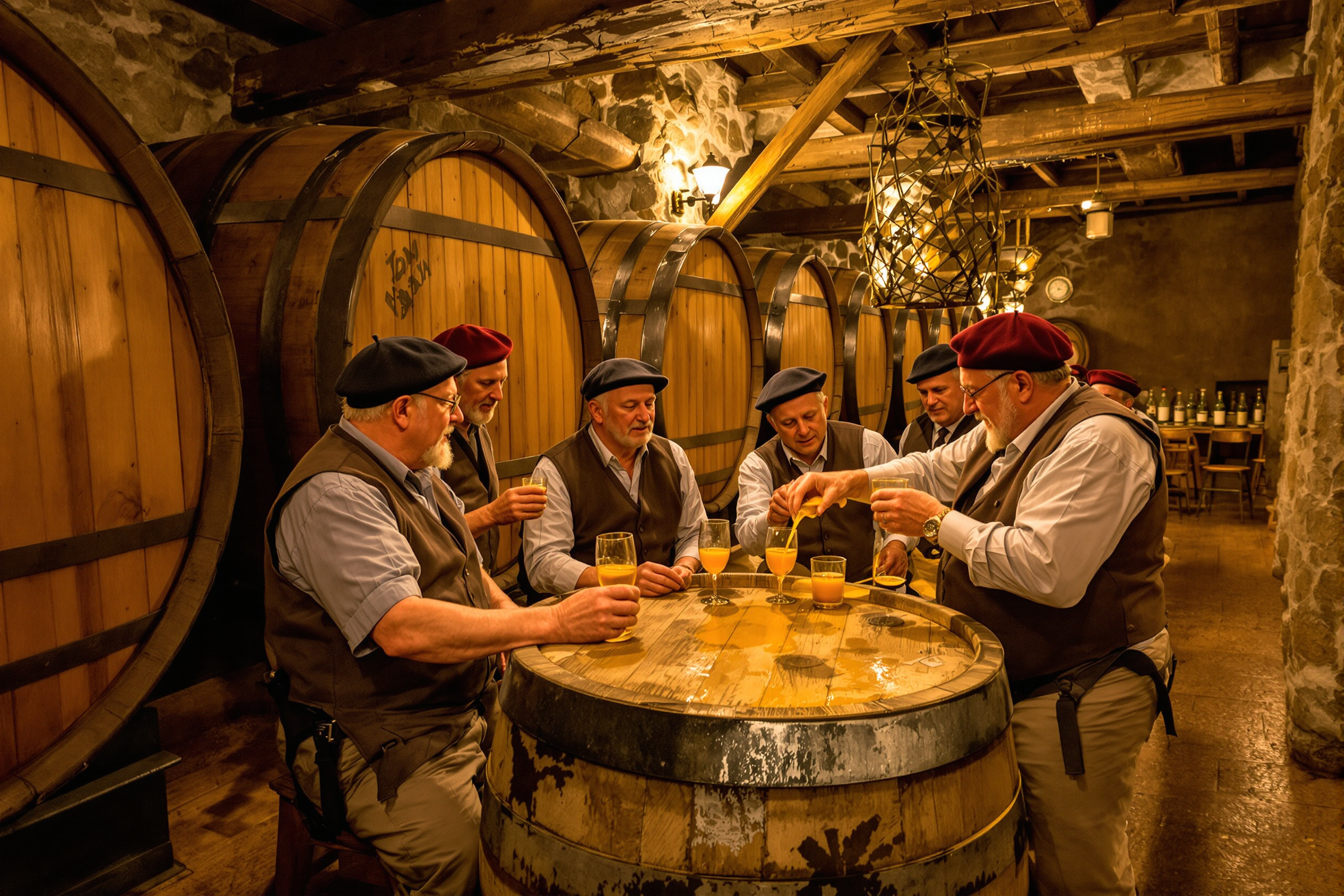
What is sagardoa?
Sagardoa, which means "apple wine" in Basque (sagar = apple, ardo = wine), represents Basque cider in its most traditional form. This ancestral drink differs significantly from other French ciders. Thanks to its ideal microclimate, the Basque region has been producing this fermented beverage for centuries - some legends even claim that Basque sailors introduced it to the Normans.
Sagardoa possesses unique characteristics reflecting its terroir. Crafted artisanally, it offers a distinctive flavor marked by a pleasant acidity and a light natural effervescence.
- Millennial history: Uninterrupted production in the Basque Country thanks to a climate conducive to apple orchards
- Special status: Specific regulations for this "apple wine," with volatile acidity often exceeding 1g/liter
- Authentic profile: Low carbonation, slightly cloudy and tangy, sometimes with a characteristic touch of bitterness
- Traditional use: Served as an aperitif or accompanying Basque gastronomy dishes in authentic sagardotegia
The sagarno tradition in Basque cider houses testifies to its cultural importance. Producers like EZTIGAR Sagarno continue this heritage today by respecting traditional manufacturing methods.
Differences from Breton cider
Unlike Breton cider - generally sweeter and more carbonated - sagardoa is characterized by its dry style, its structure, and its aging in barrels, which gives it unique vinous notes. Less effervescent and more tangy, this result is explained by a prolonged natural fermentation, typical of the Basque climate.
These differences stem from the varieties of apples used, production techniques, and the specific terroir. Basque cider favors the expression of the terroir for a drier, more authentic result, while Breton cider offers fruitier flavors.
Serving and tasting with the txotx
The txotx ritual is one of the most beautiful Basque traditions. This serving method consists of pouring the cider from a height to aerate it and reveal its aromas. In the sagardotegia, the cellar master pierces the barrel and guests collect the cider directly from the source for a memorable experience.
To fully appreciate Basque cider, serve it cool (8-12°C). Decanting or pouring from a height will release its aromas. This drink pairs perfectly with Basque gastronomy: Basque-style chicken, txuleta (rib steak), sheep's milk cheeses like Ossau-Iraty or Idiazabal, as well as local seafood and charcuterie.
From apple to cider
Transforming apples into Basque cider, or sagardoa, is an ancestral skill that has been passed down for generations. This subtle alchemy showcases the Basque terroir, its unique fruit varieties, and artisanal techniques to create exceptional beverages that serve as true ambassadors of Basque culture.
Local varieties and blends
The Basque Country cultivates over 80 ancient varieties of apples, each bringing its own personal touch to the final cider. Cider masters passionately blend these local fruits to achieve the perfect balance between acidity, sweetness, and tannic structure, which is the signature of great sagarno.
- Anisa: An ancient gem that provides finesse and delicate floral nuances
- Eri Sagara: The traditional apple that brings that typical lively freshness
- Ondo motxa: A generous variety with fruity aromas and a round texture
- Gordin Peatxa and Xuria: A complementary duo that enriches aromatic complexity
These organically grown fruits constitute the soul of artisanal cider. In Navarre and Hegoalde (Southern Basque Country), the ciders reveal more bite, while in Iparralde (Northern Basque Country), they are slightly more charming.
Producers and A.O.P. labels
Eztigar perfectly embodies this Basque tradition. Located in Saint-Just-Ibarre in Lower Navarre, this producer works with ancient varieties and crafts its organic sagardoa according to ancestral methods. Discover organic artisanal Basque cider
This "from orchard to bottle" approach guarantees absolute authenticity. Operating as a cooperative, EZTIGAR unites passionate producers. All production stages are carried out on-site, making this estate a must-visit in the region.
The Basque cider A.O.P. is a guarantee of production that respects tradition. Consumers can find various versions: brut, dry, organic, or even bold creations like hopped ciders.
Profile and alcohol content of vintages
Basque ciders stand out for their profile, which is directly linked to residual sugar after fermentation. As with champagne, this classification guides you to the ideal vintage.
The TOPA Extra-Brut beautifully illustrates the revival of Basque cider. Made from the best musts, this 6.5% ABV vintage reveals a golden hue, fresh citrus aromas, and a palate that is both powerful and elegant.
| Classification | Residual sugar content | Taste profile | Recommended pairings |
| Extra-Brut | < 6 g/L | Very dry, mineral | Seafood, cheeses |
| Brut | < 28 g/L | Dry, balanced | Aperitifs, fish |
| Demi-sec | 28-42 g/L | Slightly sweet | Desserts, foie gras |
| Sweet | > 35 g/L | Sweet, fruity | Desserts, pastries |
This diversity allows every enthusiast to find what they are looking for. Controlled fermentation develops unique characteristics, with some vintages even benefiting from long aging to perfect their complexity.
Buying and tasting at the cider house
Tasting a Basque cider is much more than a simple sampling: it's diving into local culture, meeting passionate artisans, and discovering authentic production sites. Whether you want to buy online or visit a traditional cider house, you will always find the perfect way to savor this exceptional beverage.
Where to find the best cider
Discover our selection of exceptional Basque ciders, including brut, extra-brut, demi-sec, organic, and sagardoa (apple wine) crafted artisanally with local varieties. The region's unique microclimate gives these drinks a distinct character: sagardoa is recognized by its marked acidity, slight effervescence, and rustic notes, while other ciders vary according to their sugar level (brut/demi-sec/sweet). Our range gathers renowned producers, organic vintages, and award-winning references, offering a complete panorama of traditional and modern Basque ciders. Discover our premium selection of Basque ciders
- Specialized online stores: Wide choice of artisanal references with detailed technical sheets and tasting tips
- Traditional cider houses: Direct purchase from the producer with the opportunity to taste and tour the manufacturing facilities
- Wine merchants and delicatessens: Rigorous selection by experts with tailored recommendations
- Large specialized retailers: Variable availability depending on the region, particularly in certain Leclerc stores offering local products
To choose your natural cider wisely, carefully study the product sheet indicating the apple varieties used, the type of fermentation, the aging duration, and the alcohol content. Prioritize mentions like "organic" or "from orchard to bottle" for local, environmentally friendly production. This artisanal Basque extra-brut cider, the new TOPA vintage in a 75 cl bottle (6.5% ABV), is made from 100% pure juice with no added sugar or coloring (contains sulfites); its golden hue reveals fresh fruit and citrus aromas, offering a powerful yet elegant character on the palate - enjoy chilled after slight aeration. Ideal as an aperitif or with fish, white meats, cheeses, and desserts. Sign up to be notified of its availability. Discover the TOPA extra-brut Basque cider
Visiting a sagardotegia and its kupela
Visiting a sagardotegia (Basque cider house) is a unique experience to understand the tradition of cider. These places steeped in history open their doors to you, with their stone walls and lines of kupela (traditional barrels) where the precious nectar rests in fermentation. The Hernani sagardotegia, like those in Navarre, perpetuates these ancestral skills.
The txotx ritual turns every visit into a convivial moment. When the cellar master pierces the kupela, guests gather to collect the cider flowing in a golden stream. This practice naturally aerates the beverage and reveals all its aromas. Tasting is generally accompanied by a typical Basque meal: cod omelet, grilled txuleta, and sheep's milk cheese with quince paste.
Cider houses today offer various experiences: guided tours, production workshops, commented tastings, and even professional event hosting. Their calendar follows the rhythm of the seasons: harvest from September to mid-December, txotx season from mid-January to May, and bottle sales all year round. Remember to check the hours before your visit, as each producer has their own schedule.


