
Espelette, Espelette pepper PDO: pepper, Espelette, chili – an essential Basque flavor
Espelette pepper is much more than a simple spice: it concentrates the entire soul of Basque cuisine in its vibrant red fruit. This guide reveals all the secrets of this exceptional product—from its historical roots to its contemporary uses, as well as its flavor qualities. You will learn how to recognize a true AOP Espelette pepper, use it with mastery in the kitchen, and choose the best products to enhance your dishes.
Origin of AOP Espelette pepper
The history of Espelette pepper began in the 16th century, when this variety of Capsicum annuum was brought back from South America. The great Basque navigator Juan Sebastián Elcano played a key role in its introduction to the Basque Country. By 1650, local cooks had adopted this vibrant red fruit to replace pepper, captivated by its complex and persistent aromas. This adoption marked the beginning of a culinary tradition that remains very much alive today.
Why Espelette pepper is protected
Espelette pepper enjoys unique recognition in France as the only spice with a Protected Designation of Origin (AOP). This official distinction was built gradually: first with the AOC obtained in 2000, then confirmed by the European AOP in 2008. This dual certification guarantees the authenticity of the product and preserves expertise passed down for generations.
- Exclusive geographical area: only ten communes in Labourd have the right to produce this pepper under the designation
- Demanding specifications: every step of Espelette pepper production is rigorously controlled
- Total traceability: each plot is listed to ensure the origin of the product
- Supervised labeling: only products bearing the official logo can claim the AOP
These strict specifications explain why genuine Espelette pepper stands out clearly from imitations. They impose specific rules such as regulated planting density, limited irrigation, and exclusively manual harvesting between August and November. These requirements ensure impeccable quality.
Cultivation area and AOP traceability
The AOP Espelette pepper production area is limited to ten well-defined communes: Ainhoa, Cambo-les-Bains, Espelette, Halsou, Itxassou, Jatxou, Larressore, Saint-Pée-sur-Nivelle, Souraïde, and Ustaritz. This territory enjoys a mild oceanic microclimate and an exceptional terroir that give the pepper its unique characteristics.
Each producer must strictly respect the methods of cultivation and processing. The plants must be exclusively of the Gorria variety, grown according to ancestral techniques. Traceability allows for the identification of each plot, thus guaranteeing the true origin of the product. This rigor allows consumers to unequivocally recognize an authentic AOP Espelette pepper.
Moderate heat and typical aromas
On the Scoville scale, Espelette pepper shows moderate heat, generally between 1,000 and 4,000 units. This classifies it as "spicy" but well below ultra-hot peppers like the habanero. Its heat is reminiscent of black pepper, sufficient to enhance dishes without overpowering their flavors.
Its aromatic profile is characterized by its complexity: fruity notes evoking tomato and bell pepper, enhanced by a slight smoky touch due to traditional drying. This unique flavor, both pronounced and subtle, explains why so many chefs love it. The fragrance fully unfolds during sun-drying, which concentrates the aromas without dominating other ingredients.
Using Espelette pepper in cooking
Espelette pepper, a true treasure of the Southwest, is essential for enhancing your dishes thanks to its subtle aromas. This Basque spice, less spicy than other varieties, reveals a warm and slightly sweet flavor that suits all palates.
When to add the powder for aroma
To preserve the delicate fragrance of Espelette pepper powder, it is recommended to add it at the end of cooking. A simple pinch of this orange-red powder can transform a simple dish into a real delight. Try it on roasted vegetables or pan-fried fish—its final addition allows it to express its full aromatic richness.
This technique is particularly important with high-temperature cooking. Unlike preparations based on fresh pepper, the powder's qualities diminish during prolonged exposure to heat. Consider using it in your homemade vinaigrettes or mayonnaises—its sweet notes will reveal surprising harmonies!
Basque pairings and modern ideas
Traditional Basque cuisine is full of wonders like the famous piperade or the tasty axoa, where Espelette pepper plays the leading role. These specialties perfectly illustrate the symbiosis between this spice and the products of the Pyrenean terroir.
- On duck breast: its delicate heat enhances the melt-in-the-mouth meat
- With fresh pasta: the powder brings an original touch
- In jams: a bold sweet-and-savory alliance
Contemporary cooks continue to innovate, incorporating it into cocktails or surprising pastries. Black tea with Espelette pepper is an admirable example, creating a balance between power and refinement.
Home cultivation of pepper
Although one cannot reproduce the authenticity of an AOP production, growing your own Espelette pepper remains an exciting gastronomic adventure. This crop requires some attention: well-drained soil, a sunny location, and protection against excessive humidity.
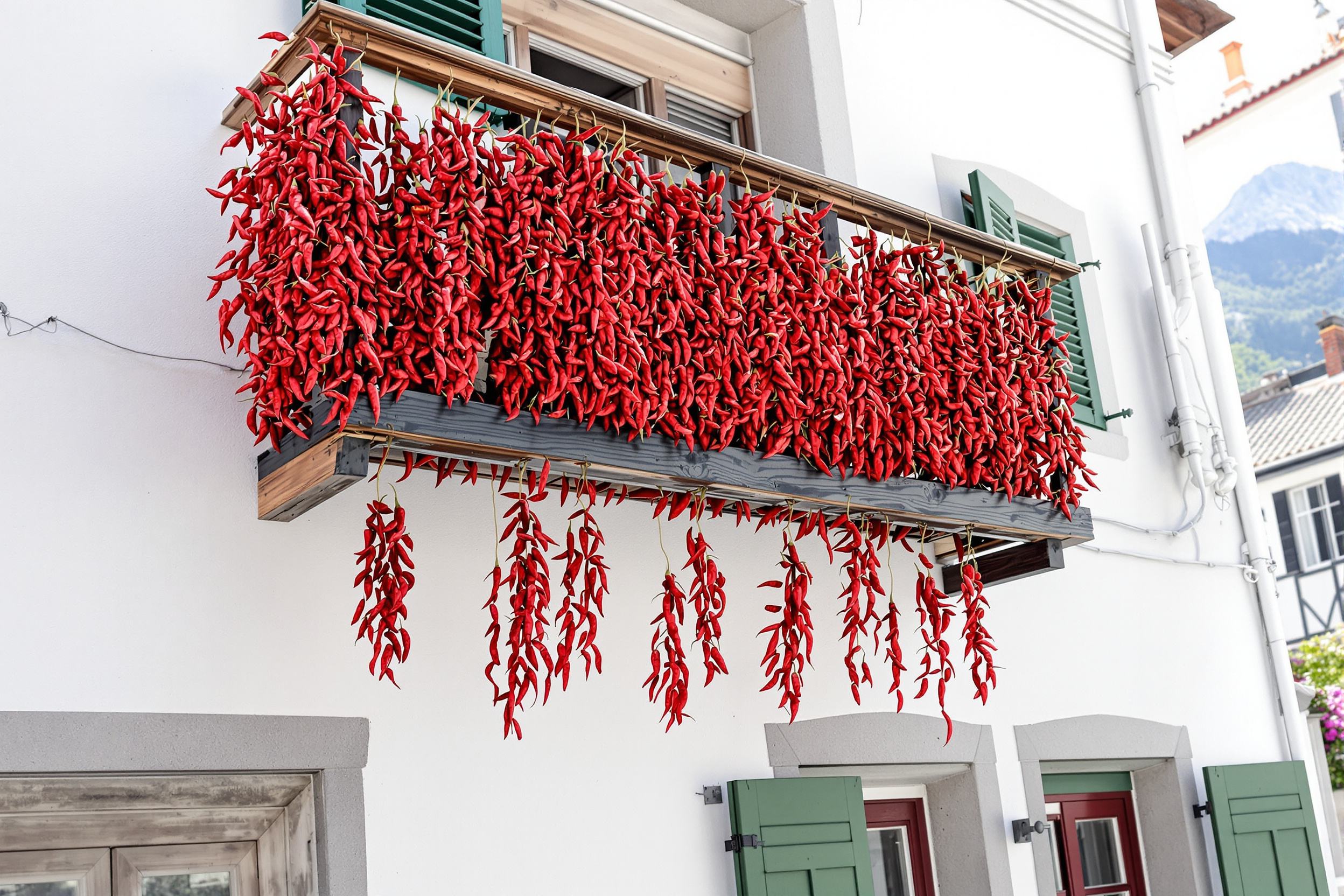
Harvesting is done at full maturity, when the fruits sport their deep red color. Traditional drying on an Espelette pepper string creates beautiful garlands while keeping the product's qualities intact. This ancestral method, between craftsmanship and gastronomy, is an integral part of the Basque heritage.
Buying and storing Espelette pepper
To find real Espelette pepper, follow these practical tips to avoid imitations. Beware of products simply stamped "Basque country" without official certification. Learning to recognize quality criteria and different packaging will help you make the right choice for all your kitchen preparations.
Recognizing a true AOP
The Espelette pepper price reflects its authenticity and strict adherence to specifications. Genuine AOP Espelette pepper necessarily has a higher cost than a standard product, due to its manual harvesting and traditional drying. Prices that are too low often hide products that do not comply with the designation.
- Visible label: the packaging must mandatory bear the AOP logo
- Production area: only ten communes in Labourd are authorized
- Traceability: prefer direct purchase from certified producers
True artisans highlight their commitment and the awards they have obtained. A powder that has won awards at the agricultural show guarantees exceptional quality. These rewards value the excellence of the aromas, color, and unique flavor.
To buy Espelette pepper with confidence, consult the official list of producers or contact the managing body. This ensures the authenticity of your purchase while supporting precious local expertise.
Choosing between fresh, string, and powder
Fresh Espelette pepper offers different aromas than the dried versions. Its crunchiness and vegetal notes pair perfectly with raw vegetables, marinades, or tartares. Available from August to November, it can be kept in the fridge for a few days but can also be frozen perfectly.
The traditional string of peppers is just as appealing for its decorative aspect as for its practical side. These garlands of 20 to 100 dried peppers brighten up the kitchen while offering an always-ready supply. Each pepper can be used whole or ground as needed.
Powder is the most convenient form for daily use. For optimal storage, keep it in an airtight container away from light (6 to 12 months). From the small 40g bottle to the 250g family bag, prefer opaque packaging if possible to preserve its beautiful red color.
Price, health, and gift ideas
Rich in capsaicin with anti-inflammatory properties and natural antioxidants, Espelette pepper has interesting nutritional benefits. It provides vitamin C and allows you to season dishes without adding fat. A healthy alternative for flavorful cooking.
Be careful, however, its health effects are regulated in Europe. Contrary to some misconceptions, it does not cause ulcers but can irritate sensitive stomachs. Those concerned should therefore consume it in moderation.
- Discovery baskets: assortments of powder, condiments, and treats for a complete tasting
- Derivative products: appetizer biscuits and sauces offer instant preparations
- Gastronomic creations: specialties signed by Southwest chefs
- Original spirits: gins and liqueurs with Espelette pepper for thrill-seekers
Discover the subtle alliance between power and roundness in this spirit creation that reveals the full complexity of this exceptional spice. Our selection of AOP products invites you to explore every facet of this treasure of the Basque Country.

