
Discover Espelette pepper - origin, flavor, and uses of the Basque PDO
Espelette pepper is one of the most iconic spices of the Basque Country, appreciated for its subtle balance between heat and fruity flavors. Originally from southwestern France, this unique variety enriches many dishes with its characteristic aromas and measured spicy touch. Together, let’s discover the history, unique features, and multiple culinary uses of this treasure of the Basque terroir, which has been protected by a PDO since 2000.
Origin of Espelette pepper PDO
The history of Espelette pepper began in the 16th century when Spanish explorers brought back Capsicum annuum plants from Central America. Introduced first in Spain, this pepper quickly reached the Basque region, where it became a staple ingredient in local cuisine, advantageously replacing black pepper, which was too expensive at the time.
Why is this pepper unique?
Espelette pepper stands out for its exceptional qualities linked to its geographical origin and traditional cultivation method. Known as "gorria" in Basque, it benefits from a unique terroir and know-how that make it an exceptional spice.
- Varietal authenticity: The gorria variety is grown exclusively within the PDO zone
- Ideal conditions: The Basque climate develops complex aromas
- Ancestral know-how: Harvesting and drying methods passed down for centuries
- Flavor profile: Perfect balance between sweetness and moderate heat (1,000-4,000 on the Scoville scale)
A must-have in traditional dishes from the southwest, this pepper seasons preparations without masking their other flavors, bringing a characteristic warm and fruity touch.
Protected zone and Basque terroir
The PDO label, obtained in 2000, guarantees the origin and quality of Espelette pepper. Production is strictly limited to ten communes in the Basque Country: Espelette (which gives the product its name), Ainhoa, Cambo-les-Bains, and other typical villages of the region.
The PDO specifications impose precise rules:
- Planting between March and May
- Manual harvesting from August to November
- Natural sun drying
- Controlled processing
Today, approximately 200 producers perpetuate this tradition over nearly 300 hectares, ensuring artisanal and high-quality production.
Heat, aromas, and available forms
With moderate heat (1,000-4,000 Scoville units), Espelette pepper entices with its subtle aromas, mingling fruity and slightly smoky notes. It can be found in different forms:
- Espelette pepper powder: the most common form, ideal for seasoning
- Strings of dried peppers: traditional and decorative
- Fresh peppers: available from August to November
- Processed products: oils, flavored salts, etc.
Whether in powder or whole form, Espelette pepper offers an infinite range of culinary uses, from simple seasoning to more elaborate preparations.
Using Espelette pepper in the kitchen
Taming Espelette pepper in the kitchen means discovering its unique flavor and its multiple culinary uses. Among essential Basque condiments—such as Xavier Isabal's Basque ketchup, David Ibarboure's piperade, or Andrée Rosier's tomato-watermelon confit, Urre Gorria Espelette pepper stands out as the "red gold" of the Basque Country, a true treasure for enhancing your dishes with authenticity.
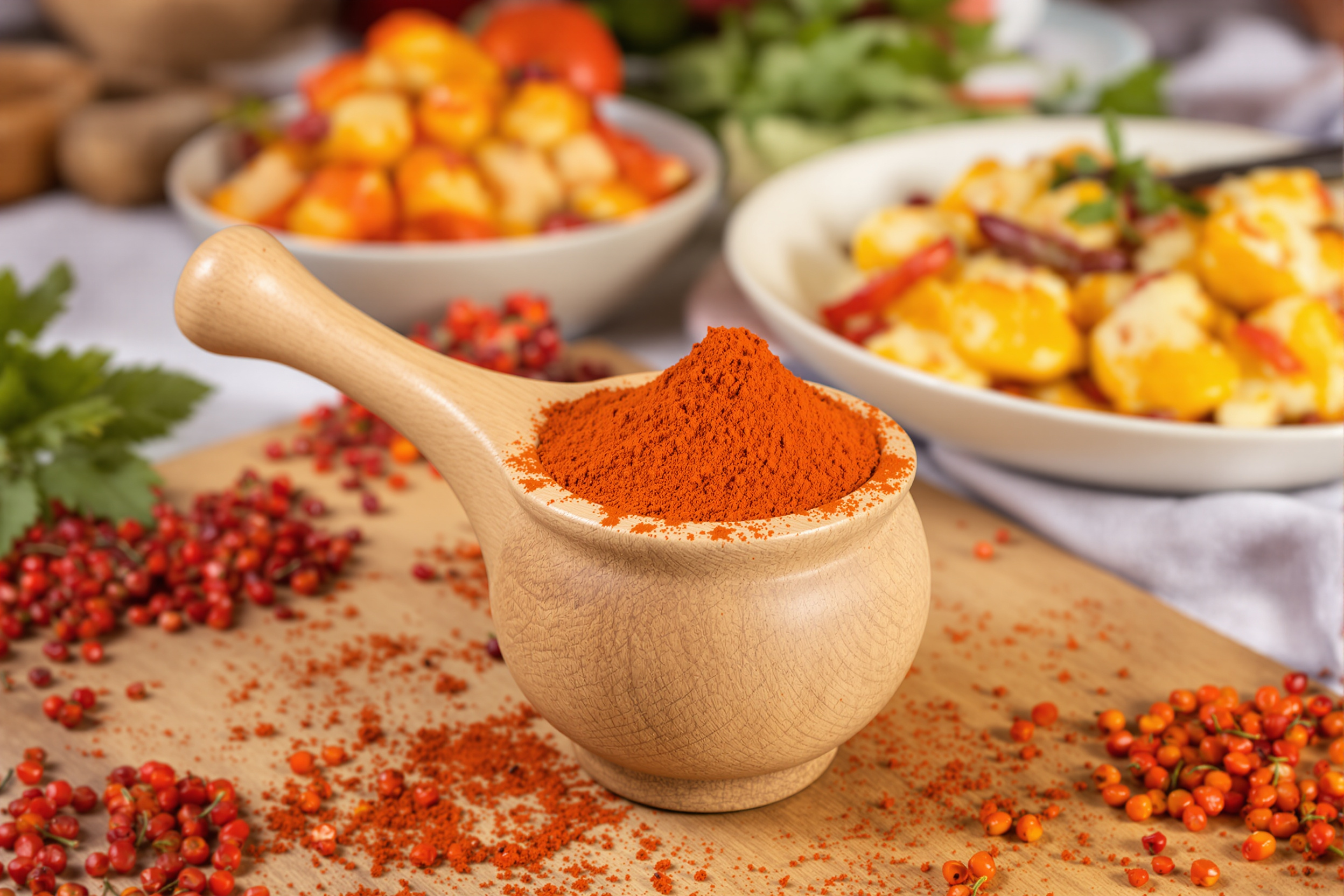
What does this pepper taste like?
Espelette pepper powder reveals complex aromas, combining gentle warmth with fruity notes. Unlike peppers that are too hot, this Basque spice offers a subtle heat that delicately awakens the palate. This makes it a perfect ingredient to give character to your recipes without excess.
Its unique feature? While Cayenne pepper immediately burns the tongue, Espelette powder gradually unfolds its flavors—first spicy, then fruity—like a good wine to be savored slowly.
How to measure and when to add it
The secret to using Espelette pepper correctly? Proper dosing. This spice with a pronounced taste requires moderation: start with a pinch for 4 people before adjusting according to preference.
- To finish a dish: Sprinkle at the end of cooking or on the plate to preserve all its aromas
- In sauces and marinades: Incorporate it from the start for uniform distribution
- Progressiveness: Increase the amounts little by little to familiarize your taste buds
The moment of addition makes all the difference: on grilled fish, a final sprinkling works wonders, while in a tomato sauce, early incorporation allows for a perfect blend. This versatility makes it an ally for all your cooking.
Recipe ideas and Basque pairings
Basque gastronomy beautifully highlights Espelette pepper. This black tea flavored with Espelette pepper harmoniously combines a ruby color, floral notes, and a spicy kick, a Basque specialty rich in antioxidants.
- Piperade: The classic pairing of peppers, tomatoes, and onions elevated by the pepper
- Revisited Axoa: The minced meat dish takes on a new dimension with this spicy touch
- Bayonne Ham: The perfect encounter between salty and slightly spicy
- Sunny-side up eggs: A simple pinch is enough to transform them into a regional specialty
These classics show how Espelette pepper is deeply embedded in Basque culinary culture. But its uses are infinite: vinaigrettes, flavored butters, or even chocolate desserts for the most daring. The essential? Moderation: the pepper should accompany the flavors, never overpower them.
Buying and storing Espelette pepper
To acquire authentic Espelette pepper, it is essential to check quality labels and choose reliable supply chains. The PDO mention guarantees the authenticity and origin of this Basque terroir product, but you must also know the right places and storage techniques to preserve its characteristic aromas.
Where to find authentic pepper
Several options allow you to buy quality Espelette pepper. The fresh variety is mainly available during the harvest, from August to November, directly from producers in the PDO zone or at markets in the Basque Country.
- At the farm: Direct acquisition from local producers, often accompanied by tours and tastings
- At markets: Especially during the pepper festival in Espelette in October
- Specialty grocery stores: Rigorous selection of products stamped with the PDO
- Local cooperatives: Grouping of producers ensuring consistent quality
The presence of the PDO label is essential to ensure the authenticity of the product. Packaging varies according to needs: small 40g containers for newcomers, 250g family sizes for regular enthusiasts.
Many producers organize tours allowing you to discover the entire chain, from cultivation to transformation into Espelette powder or other derivatives like sauces, offering a complete immersion into the world of this iconic spice.
Prices, formats, and fresh season
The price of Espelette pepper fluctuates according to the format, the season, and the place of purchase. These variations reflect the artisanal know-how and exceptional quality of this spice protected by the PDO.
The availability period depends on the natural cycle: the first fresh Espelette peppers appear in August, with peak production in September-October. The traditional strings of peppers intended for drying are sold during this period.
| Format | Period | Use | Storage |
| Fresh | Aug-Nov | Quick cooking | A few days in the cold |
| Strings | Sept-Oct | Home drying | Drying then storage |
| Espelette powder | All year | Seasoning | 2 years dry |
| Processed products | All year | Sauces and marinades | In fridge after opening |
Stabilized products like PDO powder or culinary preparations make it possible to enjoy the unique taste of Espelette pepper in all seasons, with great versatility in the kitchen.
Storage and usage tips
The method of storage varies according to the product's form. PDO powder is best preserved in an airtight container away from light, maintaining its organoleptic qualities for up to two years.
Fresh pepper requires more precautions: storage in the refrigerator for a few days, while strings require drying in a ventilated place before long-term storage at room temperature.
- Powder: In an airtight jar away from light (2 years max)
- Preparations: Refrigeration after opening
- Dry strings: Hanging in a dry place, progressive use
A practical tip: rehydrating dried peppers before processing allows you to create homemade purees and sauces that fully express the unique character of this Basque spice, a true ambassador of its gastronomic culture.


